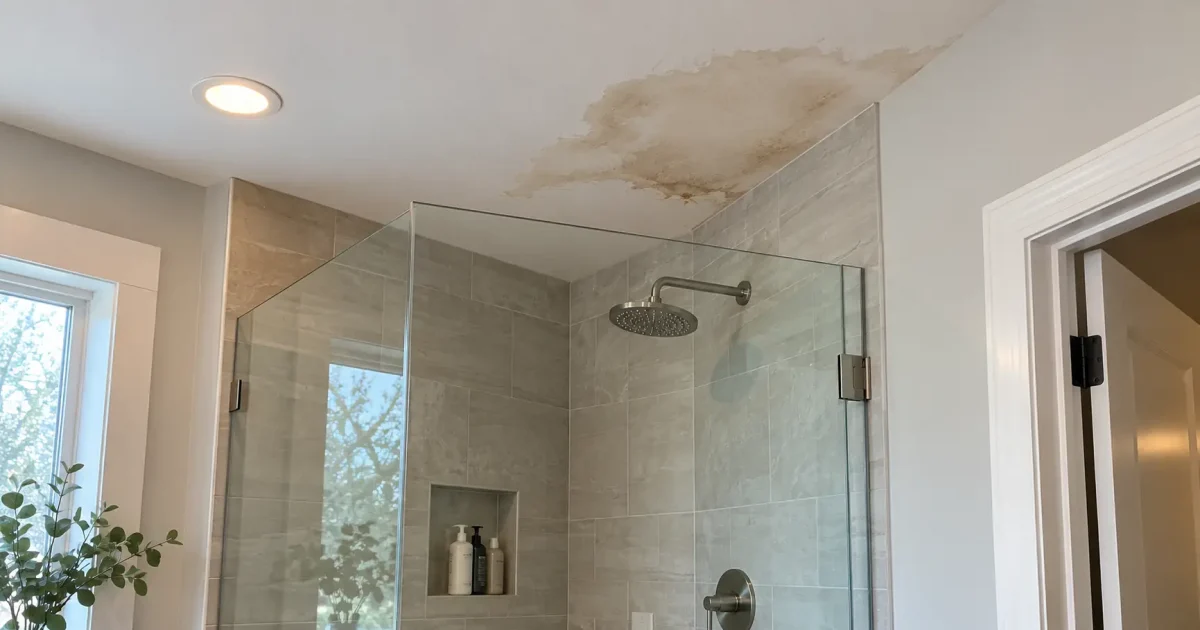

Housing repair triage starts with urgency, then gathers only the evidence needed to arrange appropriate attendance. Useful photographs establish location, visible condition or equipment identity. Targeted questions supply the history and current behavior that an image cannot show.
A sharp photograph of a spreading ceiling patch can still leave a contractor poorly prepared. It may show damage without identifying which bathroom is affected, where the patch sits, whether water is dripping now or whether the area has been repaired before. The advisor’s job is to close the gaps that affect the next action and carry that information into a usable contractor brief.
Screen for urgency before asking for a better view
Consider a resident reporting a spreading damp patch on the bathroom ceiling. The advisor follows the housing provider’s safety and urgency procedures: is water escaping now, is electrical involvement suspected or is there a concern about the ceiling’s stability?
Reported gas leaks, suspected electrical danger, major water escape and structural instability belong on the applicable emergency route without waiting for photographs. That may involve emergency services, a utility or the provider’s emergency repairs team, depending on the report and local procedures.
This is a routing decision, not an attempt to establish the fault over the phone. The advisor should not ask the resident to approach a hazard to confirm it. No climbing, opening fittings, dismantling equipment or touching suspect surfaces should be part of an evidence request.
If the report can proceed through normal intake, continue gathering the information needed for attendance.
Ask what each image would change
For housing repairs triage, photos are useful when they answer a question the next person needs resolved. Start with that question rather than a standard request for three pictures.
For the bathroom ceiling patch, a close-up may show discoloration but give no reliable location. A safe wider view can establish whether the patch is beside the doorway, above the shower or near a ceiling fitting. The advisor should confirm the position verbally and record which bathroom is affected. Those details help the contractor locate the reported area without starting the conversation again.
Different reports need different evidence:
| Evidence | Question it can help answer | Preparation value |
| Wider view of the affected area | Where is the condition in relation to the room or installation? | Locates the work and shows relevant surroundings |
| Closer view from a safe position | What visible damage or extent is being reported? | Helps describe the condition and scope an assessment |
| Safely readable equipment display or model label | Which unit is involved and what does its display show? | Can inform trade allocation and equipment preparation |
| Selected earlier photograph | What visible difference is there between the available views? | Supports the reported history when dates and context are recorded |
A damaged fitting may need its surrounding installation shown. A heating fault may benefit from an accessible model label. Neither request belongs automatically in a ceiling-patch report.
The photograph also needs a short account. Ask when the patch was first noticed, whether it is currently dripping, whether it is spreading or recurring and whether other rooms or services are affected. For equipment faults, establish what has stopped working. Check for previous repair references and what the resident says happened after that work.
A stain can remain visible when no water is currently dripping. Equally, a still image cannot describe an intermittent problem. Record the answers rather than treating the image as a substitute for them. Images of damp, leaks or structural symptoms cannot establish concealed causes.
Before requesting more evidence, name the unresolved question. Would its answer change urgency, trade selection, preparation or the purpose of attendance? If those needs are clear, proceed. If a safe additional view or guided conversation could resolve a material gap, request it. If the remaining question requires on-site investigation, arrange an assessment.
Use live clarification to resolve a specific gap
A human-assisted video conversation can help when a specific location or visible detail remains unclear. Suppose the resident’s description still leaves the advisor unsure which part of the bathroom ceiling is affected. If the resident is willing and can participate safely, a live view may resolve that gap more easily than repeated requests for new photographs.
From a safe standing position, the resident shows a wider view while the advisor checks: “Is that the ceiling above the shower in the upstairs bathroom?” The advisor can then describe the visible extent in relation to fixed features rather than relying on an isolated close-up.
If the resident mentions an earlier photograph, it serves a different purpose. The live conversation clarifies what they are showing now; a selected existing image may help document their account of change. Request that file through the provider’s approved submission process if it would help the attending contractor.
Record when the resident says the earlier photograph was taken. Different angles or lighting may limit comparison, so distinguish “resident reports the patch has spread” from what the available images actually show. Record relevant observations from the live conversation separately from references to retained files.
The handoff should preserve both parts of the account: the location clarified during the conversation and any useful supporting evidence collected afterward. The contractor should not have to ask the resident to reconstruct either.
Stop when the next action is clear
Once the location, reported change and urgency are clear, the next useful step for the ceiling patch may be attendance to investigate. Do not keep requesting images when they cannot change that decision.
Images should remain optional. Accept the repair report by telephone and provide advisor assistance or an appropriate inspection route when the resident cannot or chooses not to share them. Neither report acceptance nor urgent help should depend on an upload.
Keep requests proportionate to privacy and access needs. Ask residents to leave people, documents and unrelated belongings out of view where practical, and use approved submission and storage processes. Ask about household circumstances only where they affect urgency, communication or attendance arrangements.
Give the contractor a task, not a diagnosis
The contractor brief should make clear what is reported, where to attend and what the visit is intended to achieve. Keep three categories distinct: the resident’s account, the advisor’s observations and what remains unknown.
For the ceiling example, an illustrative brief might read:
Reported problem and location: Spreading ceiling patch in the upstairs bathroom, above the shower and toward the doorway.
>
Resident account: First noticed two days ago. Resident reports that the patch has enlarged and that the area has been affected before. No current dripping reported during this contact. Previous repair reference recorded where available.
>
Advisor observation and evidence: Discolored area visible in the location confirmed during the live conversation. Selected files referenced in the repair record, with resident-supplied dates and any comparison limitations noted.
>
Priority: Assigned under the provider’s procedures, with the screening answers and rationale recorded. Absence of reported dripping alone does not determine priority.
>
Purpose of attendance: Investigate the reported ceiling condition, assess the source and extent and determine appropriate repair work. Source and concealed condition remain unresolved.
>
Access and preparation: Confirmed contact method, appointment arrangements and relevant entry or communication requirements.
This gives the contractor a location, a history of recurrence and an explicit investigative task, rather than an expectation of a confirmed repair.
For equipment-related work, include the verified model or display information if available. Include relevant previous work and any known restrictions affecting access to the area. Do not make the contractor search through an image collection for details the advisor could have summarized.
Check that evidence references are usable by the receiving team. A file collected during intake is of little operational value if the contractor cannot identify or access it through the approved process.
Then close the resident’s reporting task. Confirm what has been accepted, give the report reference, explain the assigned priority and state the next action under the provider’s procedures. Be clear whether the planned attendance is an investigation or a repair visit. Explain how to report a material change or new hazard.
Check preparation quality, not upload volume
Review a small sample of completed handoffs with contractor feedback. Could the contractor locate the issue? Was the purpose of attendance clear? Did missing information cause another clarification call, incorrect trade allocation or a visit that could not proceed?
Assess repeat attendance by its actual cause. A second visit for parts identified during a necessary inspection is different from a second dispatch because the equipment identity was available but never recorded. Planned specialist work is different from an avoidable access failure. Review those distinctions alongside time to appropriate action so evidence collection does not become a new source of delay.
A repeat visit should prompt a review of what the first brief could reasonably have established, rather than an assumption that every second attendance was avoidable. Use missing-information reasons to improve the relevant intake questions, while preserving room for investigation and planned follow-up work.